The human body is constantly working to maintain internal balance — a state known as homeostasis. This balance affects everything from sleep quality and appetite to pain perception, immune response, mood regulation, and even reproductive function.
One of the most important biological systems involved in this regulation is the endocannabinoid system (ECS).
In recent decades, scientists have discovered that the ECS plays a far more fundamental role in human physiology than previously understood. It acts as a widespread communication network that helps different systems of the body stay in balance.
This article breaks down the ECS in a clear, science-based way while remaining accessible to non-specialists.
What Is the Endocannabinoid System?
The endocannabinoid system (ECS) is an internal regulatory network found in all humans and many other animals.
Its primary role is to help maintain physiological balance (homeostasis) across multiple biological systems.
Research shows that the ECS is involved in regulating:
- Appetite and metabolism
- Sleep cycles
- Pain perception
- Immune function
- Mood and stress response
- Memory and learning
- Reproductive processes
A scientific overview of the ECS can be found in this review:
https://www.ncbi.nlm.nih.gov/pmc/articles/PMC3165944/
The Three Core Components of the ECS
Endocannabinoids are naturally produced lipid-based signaling molecules.
They act as chemical messengers, carrying information between cells.
The two most studied endocannabinoids are:
- Anandamide (AEA)
- 2-arachidonoylglycerol (2-AG)
You can read more about anandamide here:
https://www.ncbi.nlm.nih.gov/pmc/articles/PMC3671459/
These molecules are produced on demand by cells in response to physiological needs rather than being stored like many other neurotransmitters.
Their main role is to signal when certain biological systems need adjustment.
For example, they may help signal:
- When to reduce pain signaling
- When to regulate inflammation
- When to adjust appetite or energy balance
- When to stabilize mood-related processes
Because of this, endocannabinoids are often described as “homeostasis regulators.”
2. Cannabinoid Receptors: The Body’s Receiving System
For biological communication to work, signals must be received and interpreted.
This is the role of cannabinoid receptors.
Humans have multiple receptor types involved in ECS signaling, including:
- CB1
- CB2
- TRPV1
- GPR18
- GPR55
- GPR119
A detailed receptor overview can be found here:
https://www.ncbi.nlm.nih.gov/pmc/articles/PMC3165951/
CB1 Receptors
CB1 receptors are primarily found in the central nervous system, especially in the brain.
They are involved in:
- Memory processing
- Motor control
- Pain perception
- Cognitive function
CB1 receptors are also abundant in areas related to emotional regulation and neurological signaling.
CB2 Receptors
CB2 receptors are mainly associated with the immune system.
They are found in:
- Immune cells
- Peripheral tissues
- Inflammatory response systems
CB2 activity is often linked to immune regulation and inflammation control.
Widespread Distribution
ECS receptors are not limited to the brain and immune system.
They are also present in:
- Lungs
- Liver
- Heart
- Skin
- Digestive tract
This widespread distribution helps explain why the ECS is involved in so many different physiological processes.
3. Enzymes: The ECS Reset System
Once endocannabinoids have delivered their signal, they must be broken down to prevent overactivation.
This is the role of metabolic enzymes.
The two primary ECS-related enzymes are:
- FAAH (fatty acid amide hydrolase)
- MAGL (monoacylglycerol lipase)
These enzymes:
- Break down endocannabinoids after use
- Prevent excessive signaling
- Help reset receptor availability
More information on ECS enzymes:
https://www.ncbi.nlm.nih.gov/pmc/articles/PMC3671458/
This ensures that signaling remains balanced, precise, and temporary.
How the Endocannabinoid System Works
The ECS operates as a continuous feedback system.
A simplified version of its function looks like this:
- The body detects imbalance (stress, pain, inflammation, etc.)
- Endocannabinoids are produced on demand
- They travel to target receptors (CB1, CB2, etc.)
- Receptors receive and interpret the signal
- Cellular response is adjusted
- Enzymes break down endocannabinoids once their job is done
This cycle operates constantly, helping maintain internal stability.
ECS and Homeostasis: Why It Matters
The main purpose of the ECS is to support homeostasis, meaning internal balance despite external changes.
Scientific research suggests that disruptions in ECS signaling may be associated with various physiological imbalances.
Some studies have explored potential links between ECS dysregulation and conditions involving:
- Stress response imbalance
- Chronic pain sensitivity
- Immune dysregulation
- Mood-related disorders
- Sleep disturbances
A review on ECS and homeostasis:
https://www.ncbi.nlm.nih.gov/pmc/articles/PMC3997295/
It is important to note that ECS research is still evolving, and many mechanisms are not yet fully understood.
What Happens When the ECS Is Out of Balance?
When ECS signaling does not function optimally, researchers hypothesize that the body may struggle to regulate certain physiological processes efficiently.
This does not mean a single “deficiency” causes disease, but rather that multiple interacting systems may become dysregulated.
Some researchers have proposed the concept of “clinical endocannabinoid deficiency,” though this remains under investigation and is not universally accepted in medical science.
More research is needed to confirm these hypotheses.
The ECS and Cannabinoids (CBD, THC, and Others)
One of the reasons the ECS has gained global attention is its interaction with plant-derived cannabinoids.
Phytocannabinoids such as:
- CBD (cannabidiol)
- THC (tetrahydrocannabinol)
- CBG (cannabigerol)
may interact with ECS receptors or influence endocannabinoid signaling indirectly.
A scientific review of cannabinoid interactions:
https://www.ncbi.nlm.nih.gov/pmc/articles/PMC3165950/
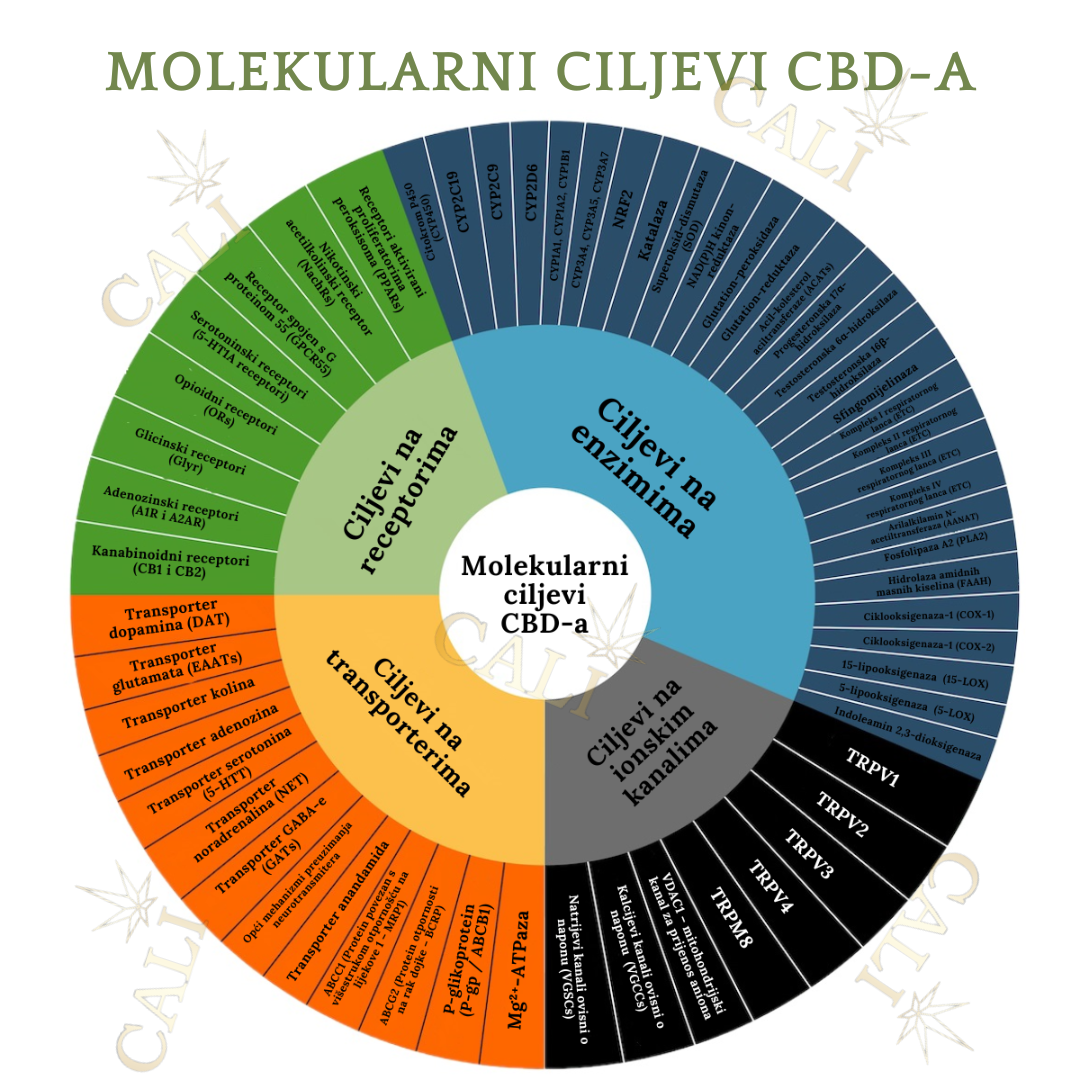
CBD in particular does not strongly bind to CB1 or CB2 receptors but is believed to influence ECS activity through indirect mechanisms, including enzyme modulation and receptor signaling pathways.
Why the ECS Is So Important in Modern Science
The ECS is now considered one of the most important regulatory systems in human physiology.
Its discovery has significantly changed how scientists understand:
- Neurological regulation
- Immune system communication
- Pain signaling
- Stress adaptation
- Whole-body homeostasis
Despite this, the ECS is still relatively under-researched compared to other major biological systems.
A Simple Way to Understand the ECS
If we simplify everything:
- Endocannabinoids = messages
- Receptors = receivers
- Enzymes = cleanup system
Together, they form a constant communication loop that helps the body stay balanced.
Final Thoughts
The endocannabinoid system represents one of the most fascinating discoveries in modern biology.
While research is still ongoing, current evidence strongly suggests that the ECS plays a fundamental role in maintaining internal balance across multiple systems of the human body.
As science continues to develop, our understanding of how cannabinoids interact with this system will likely expand, opening new perspectives in neuroscience, immunology, and wellness research.
Important Disclaimer
This article is intended for educational purposes only.
It does not provide medical advice or treatment recommendations.
CBD and cannabinoid products are not intended to diagnose, treat, cure, or prevent any disease unless approved by relevant regulatory authorities.
Scientific References
- https://www.ncbi.nlm.nih.gov/pmc/articles/PMC3165944/
- https://www.ncbi.nlm.nih.gov/pmc/articles/PMC3671459/
- https://www.ncbi.nlm.nih.gov/pmc/articles/PMC3165951/
- https://www.ncbi.nlm.nih.gov/pmc/articles/PMC3671458/
- https://www.ncbi.nlm.nih.gov/pmc/articles/PMC3997295/
- https://www.ncbi.nlm.nih.gov/pmc/articles/PMC3165950/