Cannabinoids are among the most fascinating naturally occurring compounds found in nature. They act like biochemical keys, interacting with highly specific molecular “locks” throughout the human body. These locks include receptors, enzymes, transport proteins and ion channels that help regulate countless physiological processes.
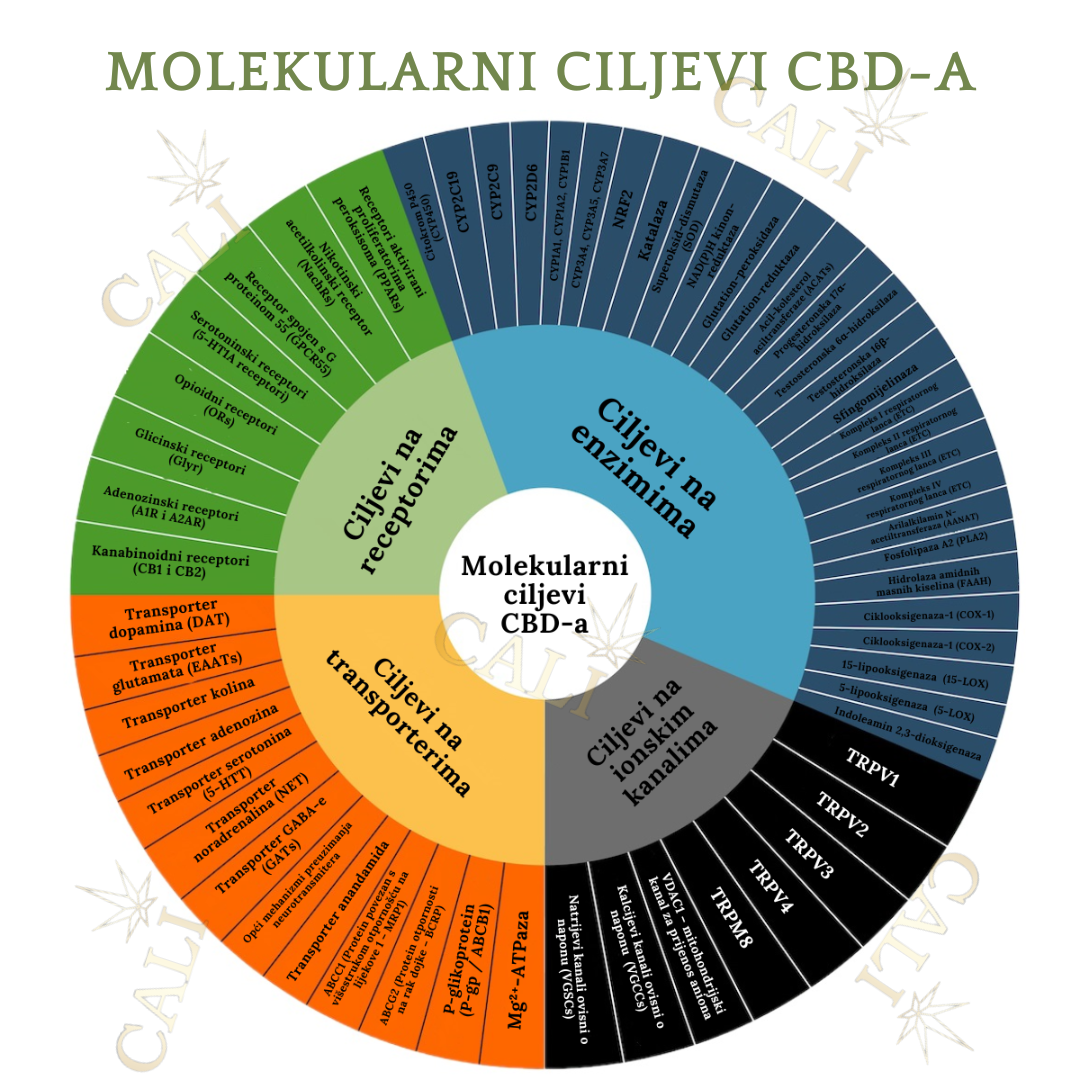
While many people associate cannabinoids exclusively with the endocannabinoid system (ECS), modern research shows that their biological activity extends far beyond the well-known CB1 and CB2 receptors. In fact, cannabidiol (CBD), one of the most studied cannabinoids found in hemp, has been reported to interact with more than 65 distinct molecular targets throughout the body.
This complexity helps explain why CBD has attracted significant scientific interest over the last two decades and why researchers continue investigating its mechanisms of action.
Understanding the Endocannabinoid System
The endocannabinoid system is a sophisticated biological network involved in maintaining physiological balance, often referred to as homeostasis.
The ECS consists primarily of:
- Endocannabinoids produced naturally by the body
- Cannabinoid receptors
- Enzymes responsible for synthesis and degradation
Two of the most studied endocannabinoids are anandamide (AEA) and 2-arachidonoylglycerol (2-AG), which help regulate processes related to cellular communication throughout the body.
Researchers have identified two major cannabinoid receptors:
- CB1 receptors, predominantly found in the central nervous system
- CB2 receptors, primarily associated with immune cells and peripheral tissues
Scientific reviews discussing the ECS can be found here:
https://www.frontiersin.org/articles/10.3389/fphar.2018.01259/full
When plant-derived cannabinoids interact with these systems, they may influence signaling pathways already present within the body. However, CBD differs significantly from THC because it does not directly activate CB1 receptors in the same manner and is not considered intoxicating.
More Than 125 Cannabinoids Have Been Identified
Cannabis sativa contains hundreds of naturally occurring compounds.
According to current scientific literature, researchers have identified more than 125 cannabinoids within the plant:
https://pmc.ncbi.nlm.nih.gov/articles/PMC8125862/
Among these compounds, CBD has become one of the most extensively investigated due to its broad pharmacological profile and favorable safety characteristics.
CBD’s Molecular Complexity
A comprehensive review published in 2024 reported that more than 65 molecular targets have been associated with CBD activity:
https://www.sciencedirect.com/science/article/pii/S1878747923008048
These targets generally fall into four categories:
- Receptors
- Enzymes
- Transport proteins
- Ion channels
Rather than acting through a single pathway, CBD appears to influence multiple signaling networks simultaneously.
This “multi-target” nature is one of the characteristics that distinguishes CBD from many conventional compounds designed to affect only one receptor.
CBD and Receptors
CB1 and CB2 Receptors
Although CBD is commonly associated with cannabinoid receptors, its interaction is relatively indirect compared to THC.
Researchers suggest that CBD may influence the activity of CB1 and CB2 receptors through complex modulatory mechanisms rather than direct activation.
Source:
Adenosine Receptors
CBD has also been linked to adenosine signaling pathways.
Adenosine receptors play important roles in cellular communication throughout the nervous and cardiovascular systems.
Research discussing CBD’s relationship with adenosine signaling:
Glycine Receptors
Studies suggest that CBD may enhance the activity of certain glycine receptors involved in neuronal signaling.
These receptors continue to be investigated for their role in sensory processing and neural communication.
Source:
Opioid Receptors
Interestingly, CBD has been shown to act as an allosteric modulator of both mu-opioid and delta-opioid receptors.
This means CBD may influence receptor behavior without directly activating the receptor itself.
Source:
Serotonin Receptors
Among the most frequently discussed CBD targets is the serotonin 5-HT1A receptor.
Researchers continue investigating how this interaction may influence various neurological signaling pathways.
Sources:
GPR55
GPR55 is sometimes referred to as a “novel cannabinoid receptor.”
Scientific studies suggest CBD may act as an antagonist at GPR55, influencing cellular signaling pathways that researchers continue to investigate.
Source:
Nicotinic Acetylcholine Receptors
Evidence suggests CBD may interact with α7 nicotinic acetylcholine receptors involved in neuronal communication.
Source:
https://www.sciencedirect.com/science/article/abs/pii/S0014299913007541
PPARγ Receptors
PPARγ receptors are involved in gene regulation and metabolic signaling.
CBD has demonstrated activity at these receptors in laboratory studies.
Source:
https://aacrjournals.org/mct/article/12/1/69/91414/COX-2-and-PPAR-Confer-Cannabidiol-Induced
CBD and Enzymes
CBD interacts with numerous enzymes involved in metabolism and cellular signaling.
Cytochrome P450 Enzymes
One of the most important areas of CBD research concerns the cytochrome P450 enzyme family.
These enzymes help metabolize many pharmaceutical compounds and natural substances.
Research has demonstrated interactions between CBD and several CYP enzymes including:
- CYP2C19
- CYP2C9
- CYP2D6
- CYP3A4
- CYP3A5
Source:
https://www.sciencedirect.com/science/article/abs/pii/S0024320511002645
Because of these interactions, individuals taking prescription medications should consult qualified healthcare professionals before using CBD products.
Nrf2 Signaling Pathway
Researchers have also observed that CBD may influence the Nrf2 pathway, which plays a role in cellular responses to oxidative stress.
Source:
https://www.sciencedirect.com/science/article/pii/S0753332223016037
FAAH Enzyme
CBD has been reported to influence fatty acid amide hydrolase (FAAH), the enzyme responsible for breaking down anandamide.
This interaction remains an active area of scientific investigation.
Ion Channels and Transport Proteins
CBD also interacts with various ion channels and transporter proteins that help regulate cellular communication.
Particular attention has been given to:
- TRPV1
- TRPV2
- TRPM8
These channels help cells respond to environmental and chemical signals.
Researchers have additionally reported interactions with transport systems involving neurotransmitters such as:
- Dopamine
- Glutamate
- GABA
These findings continue to expand our understanding of CBD’s biological complexity
The Entourage Effect: Why Full-Spectrum Hemp Extracts Matter
One of the most discussed concepts in cannabinoid science is the “entourage effect.”
The hypothesis suggests that cannabinoids, terpenes and flavonoids may interact in ways that influence overall biological activity compared with isolated compounds alone.
Although research remains ongoing and additional clinical evidence is needed, studies indicate that hemp-derived compounds may influence each other’s absorption, metabolism and receptor interactions.
For example:
- Certain flavonoids may affect CYP450 enzymes
- Specific terpenes may interact with neurotransmitter systems
- Multiple phytochemicals may act on overlapping signaling pathways
Source:
https://www.sciencedirect.com/science/article/pii/S0925443920301162
Final Thoughts
Modern cannabinoid science reveals a far more complex picture than originally believed.
Rather than acting through a single receptor, CBD appears to interact with a broad network of receptors, enzymes, ion channels and transport proteins throughout the body. This complexity continues to drive scientific interest and helps explain why CBD remains one of the most researched naturally occurring compounds found in hemp.
As research progresses, our understanding of these molecular interactions will continue to evolve. What is already clear is that CBD represents a remarkably complex phytochemical whose biology extends well beyond the traditional boundaries of the endocannabinoid system.
Disclaimer
This article is intended for educational and informational purposes only. It does not constitute medical advice, diagnosis or treatment. CBD products are not intended to diagnose, treat, cure or prevent any disease. Always consult a qualified healthcare professional regarding questions related to health conditions, medications or dietary supplements.
Reference List
- https://pmc.ncbi.nlm.nih.gov/articles/PMC8125862/
- https://www.sciencedirect.com/science/article/pii/S1878747923008048
- https://www.frontiersin.org/articles/10.3389/fphar.2018.01259/full
- https://onlinelibrary.wiley.com/doi/10.1111/ejn.16350
- https://karger.com/pha/article/83/4/217/271612
- https://pubmed.ncbi.nlm.nih.gov/16489449/
- https://pmc.ncbi.nlm.nih.gov/articles/PMC11475737/
- https://link.springer.com/article/10.1007/s11064-005-6978-1
- https://www.pnas.org/doi/10.1073/pnas.0902743106
- https://www.sciencedirect.com/science/article/abs/pii/S0014299913007541
- https://aacrjournals.org/mct/article/12/1/69/91414/COX-2-and-PPAR-Confer-Cannabidiol-Induced
- https://www.sciencedirect.com/science/article/abs/pii/S0024320511002645
- https://pmc.ncbi.nlm.nih.gov/articles/PMC6275223/
- https://pmc.ncbi.nlm.nih.gov/articles/PMC6514832/
- https://www.sciencedirect.com/science/article/pii/S0753332223016037
- https://link.springer.com/article/10.1007/s13311-015-0377-3
- https://link.springer.com/article/10.1007/s11101-023-09860-5
- https://www.sciencedirect.com/science/article/pii/S0925443920301162