Anxiety disorders are among the most common mental health conditions in the modern world. Millions of people struggle daily with excessive worry, racing thoughts, tension, restlessness, and the overwhelming feeling that the mind simply cannot “switch off.”
While occasional stress is a normal part of life, chronic anxiety can significantly affect sleep, productivity, relationships, physical health, and overall quality of life.
According to the World Health Organization (WHO), hundreds of millions of people worldwide experience anxiety-related conditions, making them one of the largest global health concerns of our time.
As scientific interest in the relationship between stress, the nervous system, and cannabinoids continues growing, researchers have increasingly begun investigating the potential role of the endocannabinoid system (ECS) and compounds such as CBD (cannabidiol) in emotional regulation and stress resilience.
This article explores the science behind anxiety, the ECS, and why cannabinoids have become one of the most discussed topics in modern wellness research.
What Is Anxiety?
Anxiety is more than temporary nervousness before an important event.
Anxiety disorders involve disproportionate or persistent worry about future situations that may trigger psychological and physical stress responses.
Common symptoms may include:
- Chest tightness
- Racing thoughts
- Restlessness
- Muscle tension
- Difficulty concentrating
- Irritability
- Excessive sweating
- Sleep disturbances
- Shortness of breath
According to the National Institute of Mental Health, anxiety disorders can range from generalized anxiety disorder (GAD) and panic disorder to social anxiety and phobia-related conditions.
Although anxiety can feel deeply psychological, it also involves very real biological processes inside the brain and nervous system.
The Endocannabinoid System: The Body’s Stress-Regulation Network
One of the most important discoveries in neuroscience over the past several decades has been the identification of the endocannabinoid system (ECS).
The ECS is a widespread regulatory network involved in maintaining physiological balance, also known as homeostasis.
Scientific research suggests the ECS plays a role in regulating:
- Stress response
- Emotional processing
- Mood balance
- Fear signaling
- Sleep
- Appetite
- Pain perception
- Immune activity
A scientific overview of the ECS can be found here:
https://www.ncbi.nlm.nih.gov/pmc/articles/PMC3997295/
The ECS consists primarily of:
- Endocannabinoids (natural signaling molecules)
- Cannabinoid receptors (CB1 and CB2)
- Enzymes that build and break down endocannabinoids
Why the ECS Matters for Anxiety
The ECS acts as a biological balancing system that helps the body adapt to stress.
Modern life constantly exposes humans to external stressors:
- Poor sleep
- Financial pressure
- Information overload
- Social stress
- Environmental pollution
- Chronic psychological pressure
Under normal circumstances, the ECS helps prevent excessive stress responses from overwhelming the body.
Research suggests the ECS is particularly involved in regulating:
- Fear extinction
- Emotional resilience
- Stress adaptation
- Recovery after stressful experiences
One of the brain regions most closely associated with fear and anxiety is the amygdala.
The amygdala plays a central role in emotional processing and threat detection.
Studies involving CB1 receptor signaling suggest that healthy endocannabinoid activity within the amygdala may help regulate fear-related responses.
Anandamide: The “Bliss Molecule
One of the most important endocannabinoids is anandamide, often nicknamed the “bliss molecule.”
The name comes from the Sanskrit word ananda, meaning joy or bliss.
Anandamide interacts primarily with CB1 receptors in the nervous system and appears closely linked to emotional regulation and stress response.
Research suggests chronic stress may reduce endocannabinoid signaling and contribute to lower anandamide levels.
More about anandamide and stress signaling:
https://www.ncbi.nlm.nih.gov/pmc/articles/PMC4337703/
This is one reason scientists became interested in cannabinoids such as CBD.
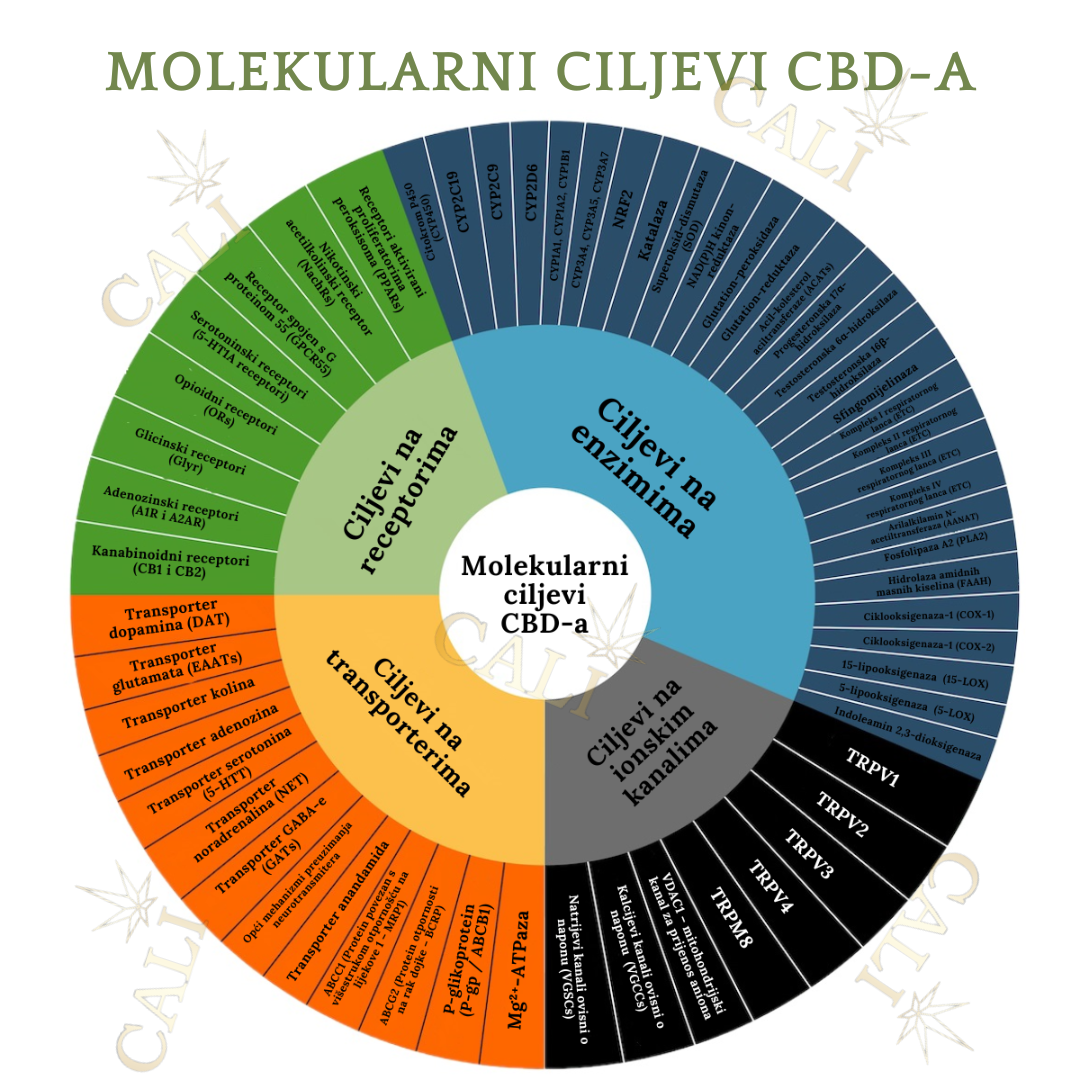
How CBD Interacts With the Endocannabinoid System
Unlike THC, CBD is considered non-intoxicating and does not produce the euphoric “high” associated with cannabis.
CBD does not strongly bind directly to CB1 receptors.
Instead, researchers believe CBD may influence the ECS indirectly through multiple pathways.
One of the most discussed mechanisms involves the enzyme FAAH (fatty acid amide hydrolase).
FAAH breaks down anandamide after it has completed its signaling role.
Some research suggests CBD may slow the breakdown of anandamide, potentially supporting healthier endocannabinoid signaling.
Scientific review discussing CBD and FAAH interaction:
https://www.ncbi.nlm.nih.gov/pmc/articles/PMC4604171/
This interaction has become a major area of interest in cannabinoid research.
CBD and Serotonin Signaling
CBD research extends beyond the ECS itself.
Animal and laboratory studies suggest CBD may also interact with 5-HT1A serotonin receptors, which are heavily involved in mood and anxiety regulation.
These receptors are important targets for several conventional anti-anxiety medications.
Researchers believe CBD’s interaction with serotonin-related pathways may partly explain why cannabinoids continue attracting attention in stress and emotional wellness research.
However, more large-scale human clinical studies are still needed.
Human Research on CBD and Anxiety
Interest in CBD and anxiety increased substantially after several human studies began reporting encouraging findings.
One widely discussed retrospective study published in 2019 evaluated psychiatric patients experiencing anxiety or sleep disturbances.
Participants received CBD alongside standard treatment protocols.
Researchers reported that many participants experienced improvements in self-reported anxiety scores and sleep quality over time.
Study reference:
https://www.ncbi.nlm.nih.gov/pmc/articles/PMC6326553/
Although these findings are promising, researchers emphasized that larger placebo-controlled clinical trials remain necessary.
Stress, Sleep, and Emotional Recovery
One reason anxiety can become so difficult to manage is because stress and poor sleep often reinforce one another.
Chronic stress may negatively influence:
- Sleep quality
- Emotional regulation
- Concentration
- Recovery capacity
- Mood stability
Researchers continue exploring whether ECS regulation may play a role in supporting overall nervous system balance.
Because the ECS is involved in sleep-wake regulation, emotional processing, and stress signaling, cannabinoid science remains an active field of investigation.
Why Product Quality Matters
As consumer interest in CBD products continues growing across Europe, product quality has become increasingly important.
Not all CBD products are created equally.
Factors influencing quality include:
- Hemp source
- Extraction methods
- Third-party laboratory testing
- Cannabinoid profile
- Product stability
- Ingredient transparency
Consumers should prioritize products manufactured according to EU standards and supported by independent testing.
A Balanced Perspective on CBD and Anxiety
The relationship between cannabinoids, the ECS, and emotional regulation represents one of the most exciting areas of modern wellness science.
Current evidence suggests the ECS plays a significant role in stress adaptation and emotional balance.
At the same time, it is important to approach cannabinoid research responsibly.
CBD is not approved in the European Union as a cure or treatment for anxiety disorders.
Individual responses may vary significantly depending on:
- Physiology
- Lifestyle
- Stress levels
- Sleep quality
- Dosage
- Product quality
Scientific understanding continues evolving rapidly, and future research will likely provide deeper insights into how cannabinoids interact with the nervous system.
Final Thoughts
Modern life places extraordinary pressure on the human nervous system.
As researchers continue exploring the biology of stress, anxiety, and emotional resilience, the endocannabinoid system has emerged as a fascinating target for scientific investigation.
CBD and other cannabinoids are now being studied not simply as isolated plant compounds, but as part of a broader conversation about balance, recovery, and nervous system regulation.
While much remains to be discovered, one thing is increasingly clear:
The ECS plays a far more important role in human health than science once believed.
Important Disclaimer
This article is intended strictly for educational and informational purposes only.
It does not constitute medical advice, diagnosis, or treatment recommendations.
CBD products are not intended to diagnose, treat, cure, or prevent any disease unless specifically approved by relevant regulatory authorities.
Individuals experiencing severe anxiety, panic attacks, depression, or other mental health concerns should consult a qualified healthcare professional.
Scientific References
- World Health Organization – Mental disorders overview
https://www.who.int/news-room/fact-sheets/detail/mental-disorders - National Institute of Mental Health – Anxiety disorders
https://www.nimh.nih.gov/health/topics/anxiety-disorders - Endocannabinoid system and homeostasis review
https://www.ncbi.nlm.nih.gov/pmc/articles/PMC3997295/ - CB1 receptor signaling and fear regulation
https://www.ncbi.nlm.nih.gov/pmc/articles/PMC3267552/ - Anandamide and stress response research
https://www.ncbi.nlm.nih.gov/pmc/articles/PMC4337703/ - WHO Critical Review Report on CBD
https://www.who.int/publications/m/item/cannabidiol-(cbd)-critical-review-report - CBD interaction with FAAH enzyme
https://www.ncbi.nlm.nih.gov/pmc/articles/PMC4604171/ - CBD and serotonin receptor research
https://www.ncbi.nlm.nih.gov/pmc/articles/PMC5938896/ - 2019 retrospective CBD anxiety study
https://www.ncbi.nlm.nih.gov/pmc/articles/PMC6326553/