Depression is far more than temporary sadness or emotional exhaustion.
It is a complex mental health condition that can deeply affect how a person thinks, feels, sleeps, works, socializes, and experiences everyday life. For millions of people worldwide, depression impacts not only emotional health, but also physical energy, motivation, relationships, and overall quality of life.
According to the World Health Organization (WHO), depression is one of the leading causes of disability globally, affecting hundreds of millions of people across all age groups and backgrounds.
As scientific understanding of the brain continues evolving, researchers have increasingly begun exploring the relationship between depression, the endocannabinoid system (ECS), and cannabinoids such as CBD (cannabidiol).
Could the body’s own cannabinoid signaling network play a role in emotional balance and stress resilience?
And why are researchers paying growing attention to CBD in mental wellness research?
Let’s explore what modern science currently suggests.
What Is Depression?
Depression is a multifactorial mental health condition characterized by persistent low mood, emotional numbness, loss of interest in previously enjoyable activities, and changes in cognition, motivation, and physical well-being.
Symptoms may include:
- Persistent sadness
- Emotional emptiness
- Fatigue and low energy
- Sleep disturbances
- Appetite changes
- Difficulty concentrating
- Reduced motivation
- Feelings of hopelessness
- Irritability
- Social withdrawal
- Loss of pleasure or interest
- Thoughts related to death or self-harm
The National Institute of Mental Health explains that depression may develop through a combination of biological, psychological, environmental, and genetic factors.
Importantly, depression is not simply “feeling sad.”
It involves complex neurobiological processes affecting the nervous system, stress response, and neurotransmitter regulation.
How Depression Develops
Researchers believe depression develops through the interaction of multiple systems within the brain and body.
Several biological mechanisms have been associated with depressive disorders, including:
- Chronic stress exposure
- Neuroinflammation
- Dysregulation of serotonin and dopamine pathways
- Sleep disruption
- Hormonal imbalance
- Impaired neuroplasticity
- Genetic predisposition
Scientific evidence increasingly suggests that chronic stress may significantly affect brain function over time.
Long-term stress exposure may influence emotional regulation centers such as:
- The amygdala
- The hippocampus
- The prefrontal cortex
These brain regions are closely involved in emotional processing, memory, motivation, and stress adaptation.
The Endocannabinoid System and Emotional Balance
One of the most important discoveries in neuroscience during recent decades has been the identification of the endocannabinoid system (ECS).
The ECS is a widespread biological signaling network involved in maintaining internal balance, also known as homeostasis.
Scientific review of the ECS:
https://www.ncbi.nlm.nih.gov/pmc/articles/PMC3997295/
The ECS helps regulate many physiological processes, including:
- Mood
- Stress response
- Emotional processing
- Sleep
- Appetite
- Pain perception
- Immune signaling
- Memory and cognition
The ECS consists primarily of:
- Endocannabinoids (naturally produced signaling molecules)
- Cannabinoid receptors (mainly CB1 and CB2)
- Enzymes that build and break down endocannabinoids
Researchers increasingly believe ECS dysregulation may contribute to various mental health conditions, including depression and anxiety-related disorders.
Anandamide: The “Bliss Molecule”
One of the most studied endocannabinoids is anandamide, often referred to as the “bliss molecule.”
Anandamide interacts primarily with CB1 receptors located throughout the nervous system and brain.
Research suggests anandamide plays a role in:
- Emotional regulation
- Stress adaptation
- Motivation
- Reward signaling
- Mood stability
More about anandamide and mood regulation:
https://www.ncbi.nlm.nih.gov/pmc/articles/PMC4337703/
Some studies suggest chronic stress may reduce healthy endocannabinoid signaling and lower anandamide levels, potentially influencing emotional resilience.
This is one reason cannabinoids such as CBD have become increasingly interesting to researchers.
How CBD Interacts With the Endocannabinoid System
Unlike THC, CBD is considered non-intoxicating, meaning it does not produce the euphoric “high” associated with psychoactive cannabis products.
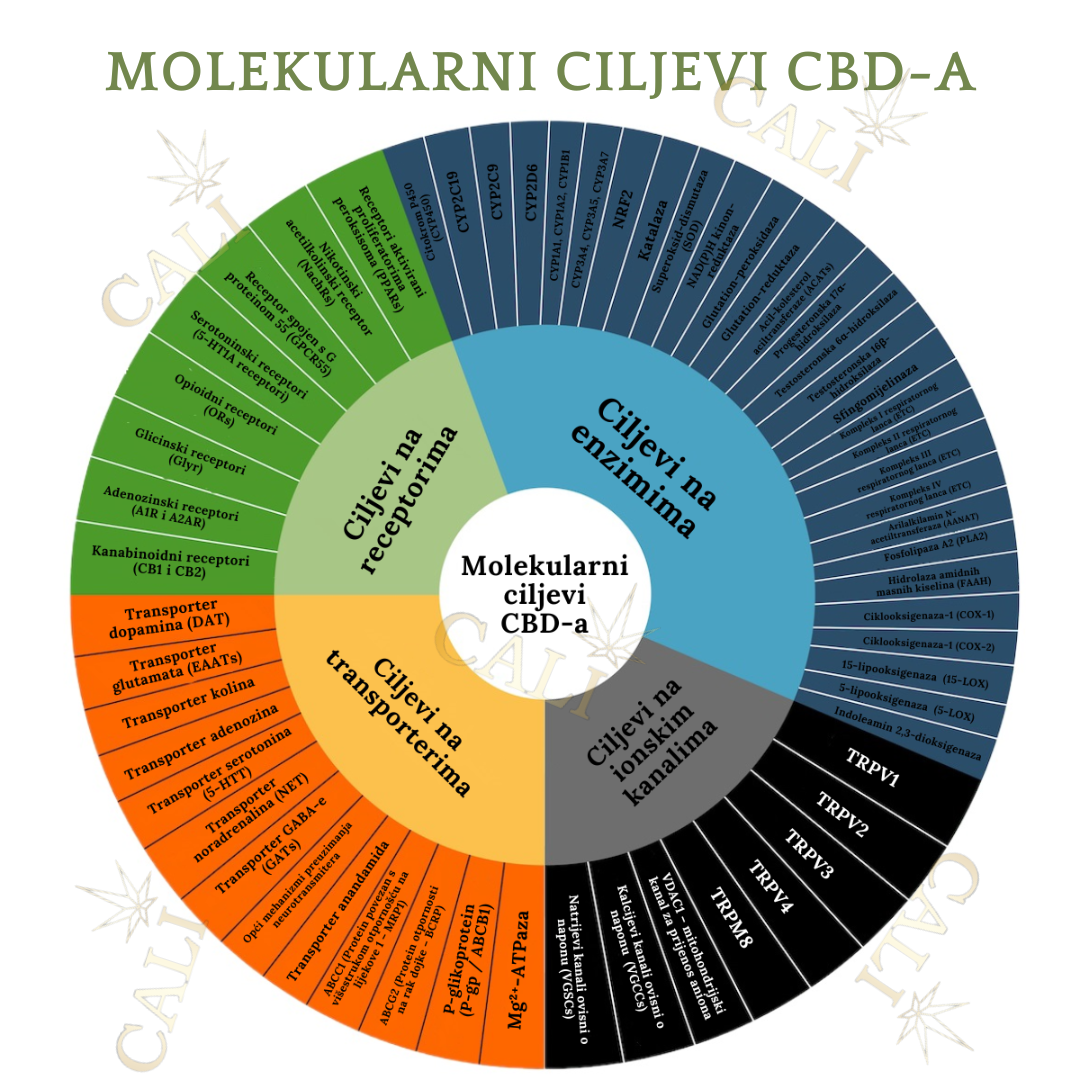
Instead of strongly binding directly to CB1 receptors, CBD appears to interact indirectly with the ECS through several biological pathways.
One important mechanism involves the enzyme FAAH (fatty acid amide hydrolase).
FAAH breaks down anandamide after it completes its signaling role.
Some studies suggest CBD may help slow the breakdown of anandamide, potentially supporting healthier endocannabinoid signaling.
Scientific review discussing CBD and FAAH interaction:
https://www.ncbi.nlm.nih.gov/pmc/articles/PMC4604171/
This area of research continues attracting substantial scientific interest.
CBD, Serotonin, and Mood Regulation
CBD research extends beyond the ECS itself.
Animal and laboratory studies suggest CBD may also interact with 5-HT1A serotonin receptors, which are heavily involved in mood regulation and emotional processing.
Serotonin signaling plays an important role in:
- Mood balance
- Emotional resilience
- Anxiety regulation
- Stress response
Many conventional antidepressant medications also target serotonin-related pathways.
Researchers continue investigating whether CBD’s interaction with serotonin systems may contribute to its observed effects in emotional wellness research.
Neuroplasticity and Brain Adaptation
Another major area of interest involves neuroplasticity — the brain’s ability to adapt, reorganize, and form new neural connections.
Modern depression research increasingly suggests impaired neuroplasticity may contribute to depressive symptoms.
Some preliminary studies suggest cannabinoids may influence pathways associated with neuroplasticity and stress recovery.
Scientific review discussing cannabinoids and neuroplasticity:
https://www.ncbi.nlm.nih.gov/pmc/articles/PMC7023045/
Researchers believe this may become an important future area of cannabinoid science.
However, much more human clinical research is still needed.
Human Research on CBD and Depression-Related Symptoms
Interest in CBD increased significantly after early human studies began reporting possible benefits related to stress, sleep, mood balance, and emotional regulation.
A retrospective study published in 2019 examined psychiatric patients experiencing anxiety and sleep disturbances who received CBD alongside standard care.
Researchers reported improvements in self-reported anxiety and sleep outcomes in many participants.
Study reference:
https://www.ncbi.nlm.nih.gov/pmc/articles/PMC6326553/
Although this study was not focused exclusively on depression, researchers emphasized the growing importance of cannabinoid research in emotional wellness.
Importantly, large placebo-controlled clinical trials remain necessary before firm conclusions can be made.
The Relationship Between Stress, Inflammation, and Depression
Modern neuroscience increasingly recognizes that depression is not solely a neurotransmitter disorder.
Research now explores the possible role of:
- Neuroinflammation
- Oxidative stress
- Immune signaling
- Chronic stress overload
Some scientists believe the ECS may help regulate inflammatory signaling and stress adaptation pathways within the body.
This is one reason cannabinoids continue attracting attention in broader wellness and neuroscience research.
A Balanced Scientific Perspective
Although CBD has become extremely popular in wellness culture, it is important to approach the topic responsibly and scientifically.
CBD is not approved in the European Union as a cure or treatment for depression.
Individual experiences with CBD products may vary significantly depending on factors such as:
- Physiology
- Lifestyle
- Sleep quality
- Stress levels
- Product quality
- Dosage
- Existing health conditions
Consumers should prioritize high-quality products that include:
- Third-party laboratory testing
- Transparent cannabinoid profiles
- Reliable sourcing
- EU-compliant manufacturing standards
The Importance of Mental Health Support
Depression can be extremely serious and should never be ignored.
While cannabinoid science continues evolving, professional mental health support remains critically important.
People experiencing severe depressive symptoms should seek help from qualified healthcare professionals, particularly if symptoms involve:
- Suicidal thoughts
- Emotional crisis
- Severe hopelessness
- Inability to function normally
CBD should never replace emergency mental health care or professional medical treatment.
Final Thoughts
Scientific understanding of depression has evolved dramatically over the past two decades.
Researchers now recognize that emotional health involves far more than isolated neurotransmitters alone. Stress biology, inflammation, neuroplasticity, sleep, and the endocannabinoid system may all contribute to emotional well-being.
CBD and cannabinoid science represent one of the most fascinating emerging areas of modern wellness research.
While many questions still remain unanswered, growing evidence suggests the endocannabinoid system plays a far more important role in emotional balance and stress adaptation than previously believed.
As research continues advancing, cannabinoids may become an increasingly important topic in future discussions surrounding emotional wellness, resilience, and nervous system regulation.
And for millions of people searching for better balance in a stressful modern world, that research offers hope worth exploring.
Important Disclaimer
This article is intended strictly for educational and informational purposes only.
CBD products are not intended to diagnose, treat, cure, or prevent any disease.
The information provided here should not replace professional medical advice, diagnosis, or mental health treatment.
Individuals experiencing depression or other mental health conditions should consult a qualified healthcare professional before using cannabinoid-based products.
Scientific References
- World Health Organization – Depression overview
https://www.who.int/news-room/fact-sheets/detail/depression - National Institute of Mental Health – Depression
https://www.nimh.nih.gov/health/topics/depression - Endocannabinoid system overview
https://www.ncbi.nlm.nih.gov/pmc/articles/PMC3997295/ - Anandamide and emotional regulation research
https://www.ncbi.nlm.nih.gov/pmc/articles/PMC4337703/ - WHO Critical Review Report on CBD
https://www.who.int/publications/m/item/cannabidiol-(cbd)-critical-review-report - CBD interaction with FAAH enzyme
https://www.ncbi.nlm.nih.gov/pmc/articles/PMC4604171/ - CBD and serotonin receptor research
https://www.ncbi.nlm.nih.gov/pmc/articles/PMC5938896/ - Cannabinoids and neuroplasticity review
https://www.ncbi.nlm.nih.gov/pmc/articles/PMC7023045/ - 2019 CBD retrospective psychiatric study
https://www.ncbi.nlm.nih.gov/pmc/articles/PMC6326553/