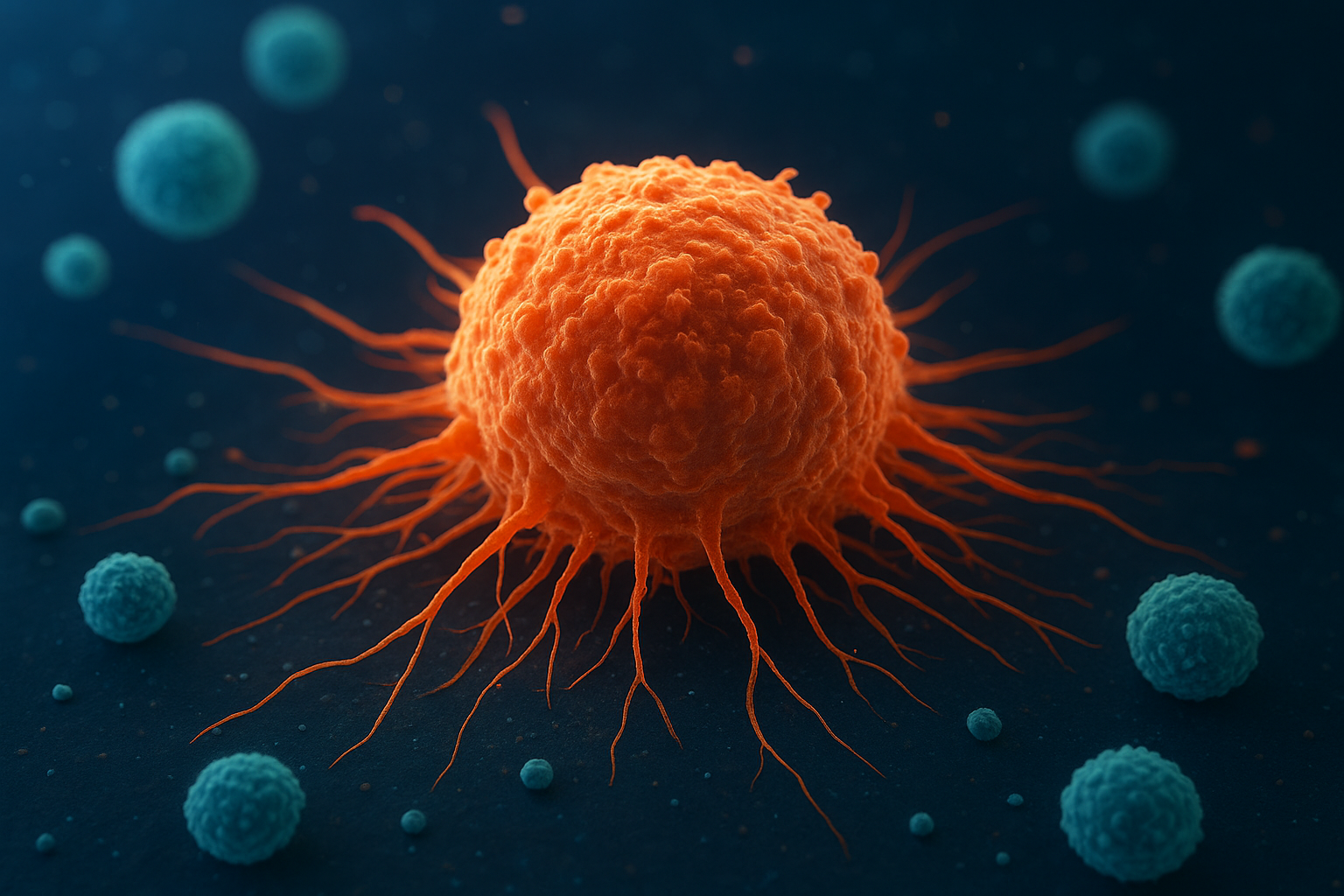
Cannabis has attracted growing scientific interest in cancer research because its cannabinoids interact with a wide range of cellular receptors, enzymes and signaling pathways. Among the compounds being investigated, CBD (cannabidiol) has received particular attention because laboratory studies have reported effects on processes such as cell proliferation, migration and apoptosis.
But what does the science actually show?
The answer is more complex than the simple statement that “cannabis kills cancer cells.” Research has identified several potentially important mechanisms through which cannabinoids may influence cancer-cell biology, but most of this evidence remains preclinical, meaning that it comes from laboratory and animal studies rather than definitive clinical trials in humans.
The Endocannabinoid System and Cancer Research
The endocannabinoid system (ECS) is a biological signaling network involved in regulating numerous physiological processes. It includes the cannabinoid receptors CB1 and CB2, naturally occurring endocannabinoids such as anandamide and 2-AG, and enzymes responsible for their synthesis and breakdown.
Research into the ECS has shown that cannabinoid signaling extends beyond the nervous system and can influence cellular communication, immune regulation and other biological processes.
This broad biological activity is one reason researchers are investigating whether cannabinoids could influence the behavior of cancer cells.
How Can Cannabinoids Affect Cancer Cells?
Cancer cells are characterized by uncontrolled proliferation, altered metabolism and the ability to avoid normal mechanisms of cell death.
A systematic review examining the biological effects of CBD on human cancer-cell models analyzed 83 studies and reported effects involving cell viability, proliferation, migration and apoptosis. The review also emphasized that the results varied considerably depending on the cancer-cell type, CBD concentration, exposure time and experimental conditions.
This is an important distinction.
A substance producing an effect in a laboratory cancer-cell model does not automatically mean that the same effect will occur in a human body.
Nevertheless, these findings provide researchers with several interesting molecular mechanisms to investigate.
1. Apoptosis – Programmed Cell Death
One of the most frequently studied mechanisms is apoptosis, the process by which cells activate an organized form of programmed cell death.
Cancer cells can acquire mechanisms that allow them to avoid or resist these normal cellular death signals.
Research involving CBD and cancer-cell models has reported increased apoptosis under certain experimental conditions. A systematic review of CBD studies found that apoptosis was among the most consistently investigated biological responses, although the magnitude of the effect varied according to concentration and cell type.
A recent review of CBD’s cellular and molecular mechanisms also describes apoptosis and autophagy among the principal processes investigated in preclinical cancer research.
The important point is that these findings demonstrate a biological effect in experimental systems — not that CBD has been clinically proven to eliminate cancer in humans.
2. Ceramide – A Key Cellular Signaling Molecule
One of the most interesting areas of cannabinoid research involves ceramide signaling.
Ceramides are members of the sphingolipid family and act not only as structural components of cell membranes but also as important intracellular signaling molecules.
Research into ceramide-dependent cancer cell death has shown that changes in ceramide generation can participate in several forms of regulated cell death, including apoptosis, necroptosis and mitophagy.
This has led scientists to investigate whether cannabinoids can influence ceramide metabolism.
A recent review of CBD’s molecular mechanisms describes ceramide biosynthesis as one of the pathways through which CBD may contribute to cellular stress, followed by ER stress, autophagy and apoptosis in certain experimental cancer models.
This does not mean that CBD simply “turns on ceramide and kills cancer.” The actual biology is considerably more complex and depends on the type of cell, the metabolic environment and the concentration of the compound.
3. Endoplasmic Reticulum Stress
The endoplasmic reticulum (ER) is responsible for many important cellular functions, including the folding and processing of proteins.
When cells experience significant stress, they activate mechanisms collectively known as the unfolded protein response.
If the stress becomes excessive or cannot be resolved, these pathways can contribute to programmed cell death.
Experimental cannabinoid research has linked CBD exposure with ER stress and changes in proteins such as ATF4 and CHOP.
Particularly interesting findings have emerged from research into pancreatic cancer models, where ceramide synthase 1 (CerS1) has been associated with CBD-induced ER stress and apoptosis.
This is an important example of how researchers are beginning to connect individual molecular events rather than simply observing that a cannabinoid affects cell viability.
4. Autophagy – The Cell’s Recycling System
Another important process investigated in cannabinoid research is autophagy.
Autophagy is a cellular recycling and quality-control process through which cells break down and recycle damaged proteins and cellular components.
Its role in cancer is complex.
Under some circumstances, autophagy can help cancer cells survive stress. Under other circumstances, excessive or dysregulated autophagy can contribute to cellular death.
Research therefore does not support the simplistic statement that “CBD activates autophagy and kills cancer cells.” Instead, studies suggest that CBD can influence autophagy-related pathways in a context-dependent manner, sometimes together with ER stress, mitochondrial dysfunction and apoptosis.
5. Oxidative Stress and Reactive Oxygen Species
Another mechanism being investigated is oxidative stress.
Cancer cells often operate under an altered metabolic environment and can already experience elevated levels of reactive oxygen species (ROS).
Experimental studies have investigated whether CBD can further influence cellular redox balance and ROS-related signaling.
When oxidative stress becomes excessive, it can damage cellular proteins, lipids and DNA and contribute to mitochondrial dysfunction and programmed cell death.
Reviews of CBD research describe ROS accumulation and oxidative stress as potential contributors to cannabinoid-induced cellular responses in experimental cancer models.
6. Mitochondria and Cellular Energy
Mitochondria are commonly described as the cell’s energy centers, but they also play an important role in the regulation of programmed cell death.
When mitochondrial function becomes severely disrupted, cells can activate pathways leading to apoptosis.
Research into cannabinoids has therefore investigated mitochondrial dysfunction and changes in mitochondrial membrane potential as possible components of cannabinoid-induced cancer-cell responses.
This is particularly interesting because ceramide signaling itself can interact with mitochondrial mechanisms involved in cell death. Research on ceramide-dependent cancer-cell death has described connections between ceramide signaling and mitochondrial pathways.
7. PI3K/AKT/mTOR and Other Signaling Pathways
Cancer cells frequently rely on signaling networks that promote growth, metabolism and survival.
One of the most important examples is the PI3K/AKT/mTOR pathway, which regulates cellular growth, protein synthesis, metabolism and survival.
Recent reviews of CBD’s biological activity describe experimental evidence that CBD can influence the PI3K/AKT/mTOR pathway, with downstream effects involving cellular proliferation and autophagy.
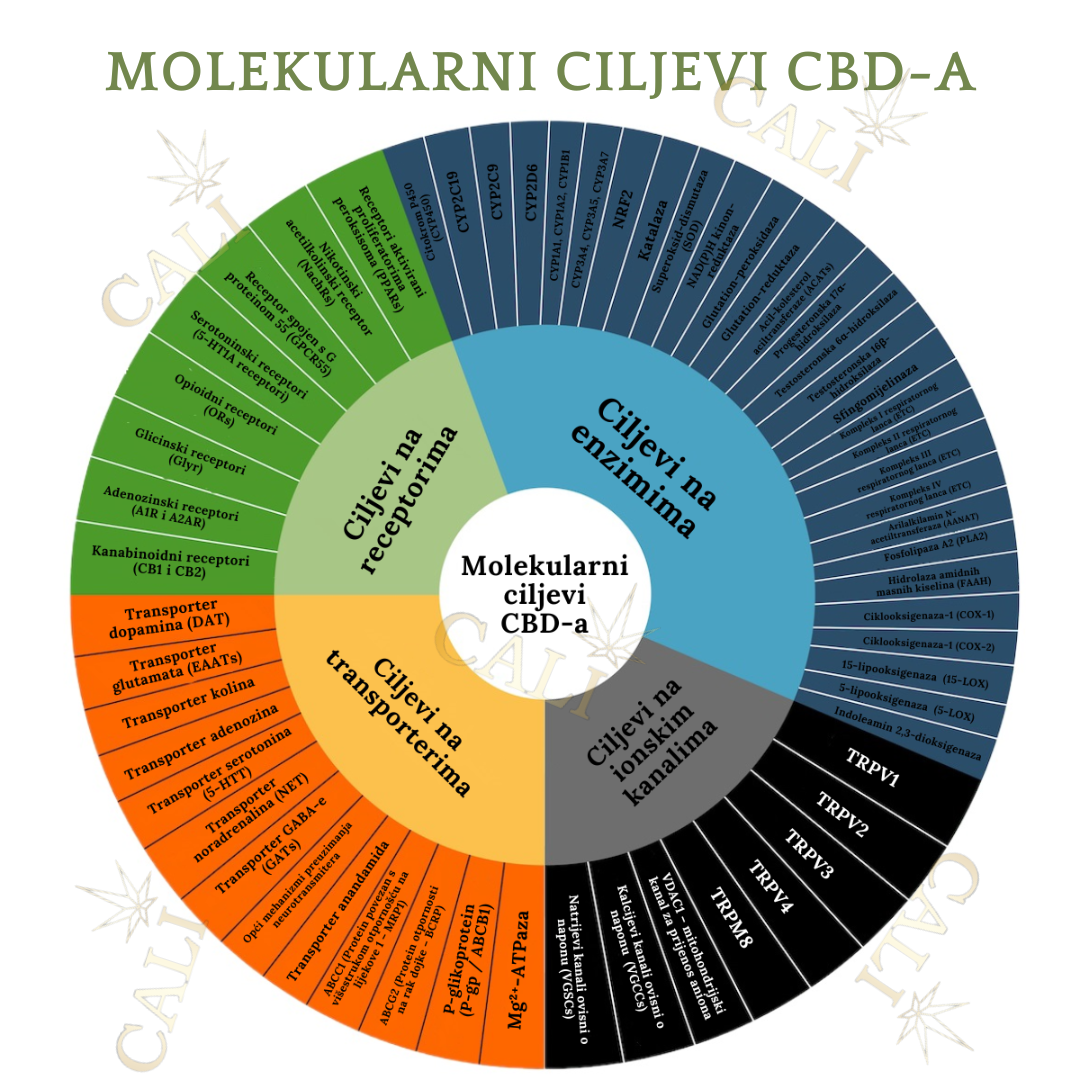
Other pathways investigated in cannabinoid research include MAPK/ERK, NF-κB, PPARγ and transient receptor potential channels.
The importance of these findings lies in the fact that cannabinoids may influence several interconnected signaling networks rather than acting through one single molecular target.
8. CB1, CB2 and Other Molecular Targets
The cannabinoid receptors CB1 and CB2 are central components of the endocannabinoid system.
CB1 is particularly abundant in the nervous system, while CB2 is strongly associated with immune and peripheral tissues.
Some cancer-cell models express cannabinoid receptors, and researchers have investigated whether cannabinoid-receptor signaling contributes to changes in proliferation and apoptosis.
However, CBD should not be described simply as a substance that “activates CB1 and CB2.”
Its pharmacology is considerably more complex.
CBD can interact with multiple molecular targets, including TRPV channels, PPARγ and other signaling systems, while its effects can also occur through receptor-independent mechanisms.
9. Cannabinoids and the Tumor Microenvironment
Cancer cells do not exist in isolation.
A tumor consists of cancer cells together with immune cells, connective tissue, blood vessels and numerous signaling molecules that collectively form the tumor microenvironment.
Researchers are therefore also investigating how cannabinoids may influence communication between tumor cells and their surrounding environment.
Potential areas of interest include inflammatory signaling, immune-cell activity, angiogenesis and cellular migration.
Although these mechanisms are being actively investigated, the effects can differ significantly depending on the cannabinoid, cancer type and experimental model.
10. Why Laboratory Results Are Not the Same as Cancer Treatment
This is perhaps the most important point when discussing cannabis and cancer.
A compound can produce a strong effect against cancer cells in a laboratory experiment and still fail to become an effective treatment in humans.
There are several reasons.
The concentration required to produce an effect in cultured cells may be very different from the concentration that can safely be achieved in human tissues.
Absorption, distribution, metabolism and bioavailability can also differ considerably between experimental conditions and real-world administration.
Most importantly, laboratory and animal studies do not provide the same level of evidence as properly designed human clinical trials.
The systematic review of CBD and human cancer-cell models specifically noted conflicting results related to differences in concentration, administration and exposure time.
This is why promising laboratory findings should be viewed as a basis for further research rather than proof of clinical efficacy.
What Does the Human Evidence Actually Show?
This is where the distinction between preclinical research and clinical evidence becomes essential.
There is a substantial body of laboratory research investigating cannabinoids and cancer. However, clinical evidence demonstrating that cannabis or CBD can reliably treat cancer in humans remains insufficient.
The ASCO guideline on cannabis and cannabinoids in adults with cancer reviewed the available clinical evidence and concluded that clinicians should not recommend cannabis or cannabinoids as cancer-directed treatment outside the context of a clinical trial.
The same guideline notes that certain cannabinoid medicines may have a role in refractory chemotherapy-induced nausea and vomiting when added to appropriate antiemetic treatment.
Therefore, the scientifically responsible conclusion is not that “cannabis cures cancer.”
A more accurate statement is that cannabinoids are being actively investigated for their effects on cancer-cell biology, with multiple promising mechanisms demonstrated in preclinical research, while their role as cancer-directed treatments in humans remains an open clinical research question.
Why Does Cannabinoid Cancer Research Matter?
If cannabinoids are not yet established cancer treatments, why does research in this area continue?
Because the underlying biology is genuinely interesting.
Cancer is not one single disease with one single mechanism. Different cancers depend on different combinations of growth signals, metabolic pathways, immune interactions and mechanisms that allow cells to survive stress.
Cannabinoids interact with several of these biological systems.
Research into ceramide signaling, ER stress, mitochondrial dysfunction, oxidative stress, autophagy and apoptosis may therefore help scientists better understand how cancer cells respond to cellular stress.
Future research may determine whether particular cannabinoids could eventually have a role in carefully defined combination strategies or in specific cancer subtypes.
But that question requires properly designed clinical studies.
The Bigger Picture
The most interesting aspect of cannabinoid research may ultimately be the fact that cannabinoids do not appear to operate through a single mechanism.
CBD and other cannabinoids can interact with multiple molecular targets and influence interconnected cellular pathways.
In experimental cancer models, researchers have investigated cannabinoid-associated changes in:
- apoptosis
- autophagy
- ceramide metabolism
- endoplasmic reticulum stress
- oxidative stress
- mitochondrial function
- cellular proliferation
- cell migration
- inflammatory signaling
- PI3K/AKT/mTOR signaling
- MAPK/ERK signaling
- CB1 and CB2 receptor signaling
- TRPV and PPARγ pathways
Taken together, these findings make cannabinoid biology a fascinating area of modern cancer research.
But they also explain why simple statements such as “CBD kills cancer cells” do not accurately represent the current scientific evidence.
Conclusion
Research into cannabis, cannabinoids and cancer has moved far beyond anecdotal observations.
Scientists are now investigating specific molecular mechanisms through which cannabinoids may influence cancer-cell biology, including ceramide signaling, ER stress, apoptosis, autophagy and mitochondrial dysfunction, as well as multiple intracellular signaling pathways.
The findings from laboratory and animal studies are certainly interesting and provide a strong rationale for continued investigation.
At the same time, it is essential to distinguish preclinical potential from proven clinical treatment.
Cannabinoids should therefore not be presented as a replacement for established cancer therapy. Instead, they represent an active and evolving area of biomedical research that may help scientists better understand cellular signaling and potentially identify new therapeutic strategies in the future.
The most scientifically honest message is simple:
The research is promising. The mechanisms are fascinating. But the clinical answer is not yet fully established.
And that is precisely why more high-quality research is needed.
References
- Anti-Cancer and Anti-Proliferative Potential of Cannabidiol: A Cellular and Molecular Perspective — PubMed
- Biological effects of cannabidiol on human cancer cells: Systematic review of the literature — PubMed
- Mechanisms of Ceramide-Dependent Cancer Cell Death — PubMed
- Cannabidiol as an immune modulator: A comprehensive review — PubMed
- Cannabidiol’s cytotoxicity in pancreatic cancer is induced via an upregulation of ceramide synthase 1 and ER stress — PubMed
- Cannabis Biomolecule Effects on Cancer Cells and Cancer Stem Cells: Cytotoxic, Anti-Proliferative, and Anti-Migratory Activities — PubMed
- Endocannabinoid System: Chemical Characteristics and Biological Activity — PubMed
- Cannabis and Cannabinoids in Adults With Cancer: ASCO Guideline — PubMed